Viaozutis Storage Cabinets Built for Real Rooms
The Viaozutis Storage Cabinet line is two cabinets with very different jobs: a tall, narrow tower that makes use of vertical bathroom or entryway wall space, and a wide, low coffee bar cabinet that anchors a kitchen counter, living room wall, or bathroom vanity area. Both are engineered wood with finished surfaces, adjustable interior shelves, and drawers — the right choice depends on how much floor space you can give up and how much vertical clearance you have.

Both Cabinets, Side by Side
Tall Storage Cabinet Black
See on Amazon
Coffee Bar Storage Cabinet
See on AmazonSee more products
Discover the full product lineup with current selection on Amazon.
All products on AmazonCabinet Specifications at a Glance
The two cabinets share the same brand and general construction approach but solve different storage problems. This table puts the key specs side by side so you can confirm fit before ordering.
| Model | Assembled Dimensions (D × W × H) | Weight | Drawers | Shelves | Notable Features | Best For |
|---|---|---|---|---|---|---|
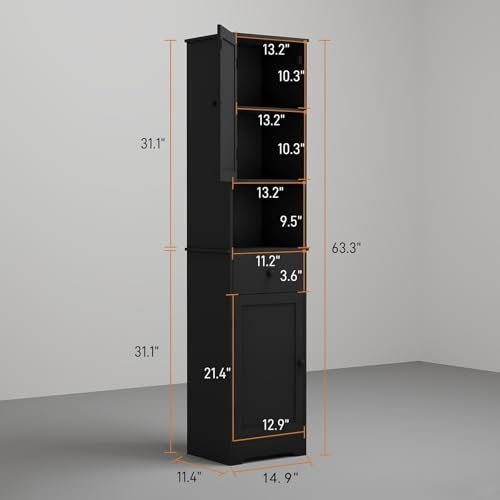
| Tall Tower Cabinet (Black) | 11.61" D × 14.96" W × 63.38" H | 42.65 lbs | 2 | 2 adjustable | Anti-tip hardware included; vertical tower profile | Narrow bathrooms, entryways, tight wall gaps where floor space is minimal |
| Wide Coffee Bar Cabinet (White) | 11.81" D × 35.43" W × 31.49" H | 44.2 lbs | 3 | 2 adjustable | Lockable doors; usable top surface; wide lateral profile | Kitchens, living rooms, bathrooms needing a work surface and lateral storage |
If your available wall space is narrow but tall, the tower is the clear answer; if you have horizontal wall space and want a functional top surface, the wide cabinet delivers more usable real estate per square foot of floor space.
How to Pick the Right Cabinet for Your Space
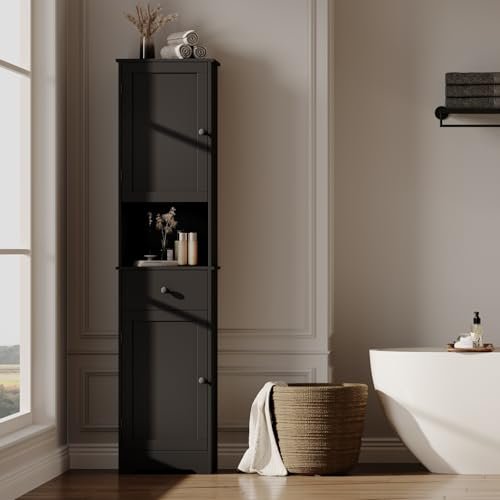
The single most important decision is footprint versus height. The tall black tower stands 63.38 inches high on a base that's only 11.61 inches deep and 14.96 inches wide — roughly the footprint of a shoebox. If you're working with a narrow bathroom wall, a tight entryway, or a corner next to a toilet or door frame, that slim profile is the point. It reaches above most door handles, which means it captures storage space that most furniture simply ignores.
The white coffee bar cabinet goes wide instead of tall: 35.43 inches across, 31.49 inches high, and 11.81 inches deep. It fits below a standard window, works as a kitchen counter extension, and won't visually crowd a living room wall the way a full-height cabinet might. If you need a surface to work on — a coffee station, a bathroom countertop supplement, a spot to set things down — the wide cabinet gives you that horizontal real estate. The tower does not.
Here's a quick decision framework:
- Limited floor space, need vertical storage: The tall black tower. At under 15 inches wide, it fits in gaps that nothing else will.
- Need a usable top surface and lateral storage: The wide white cabinet. The lower profile means the top is reachable and functional as a workspace.
- Bathroom with low ceilings or overhead cabinets already installed: Measure clearance before ordering the tall tower — 63.38 inches is just over 5 feet, which clears most standard ceilings but can conflict with soffit or overhead shelving.
- Living room or kitchen where the cabinet will be visible from multiple angles: The white cabinet's horizontal proportions tend to read as furniture; the tall tower reads as storage. Choose accordingly.
- Need a lock: Only the wide white cabinet includes a lockable door feature. If you're storing medications, cleaning products, or anything that needs to stay out of reach, that's the one.
Where These Cabinets Actually Work in Your Home
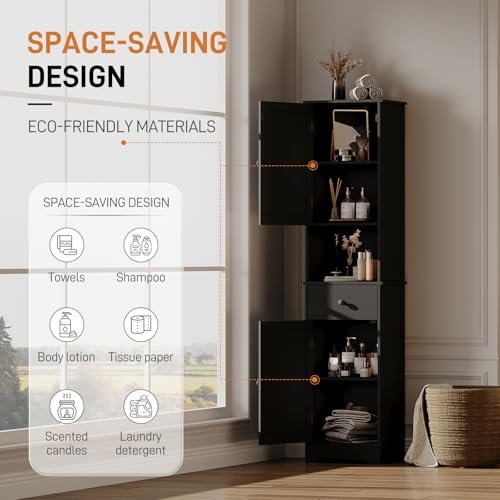
The tall black tower is listed for shower rooms, but it earns its keep in entryways and narrow hallways just as well. In a bathroom, it stands next to a vanity or beside a toilet to hold towels on the adjustable shelves and toiletries in the two drawers. In an entryway, the drawers handle keys, mail, and small accessories while the shelves behind the doors take shoes, hats, or folded items. Because it's only about 15 inches wide, it slots into the kind of dead-wall space that usually just collects clutter.
The wide white cabinet has more flexibility. As a coffee bar cabinet, it holds a machine on top, mugs and supplies behind the two doors, and pods or accessories in the three drawers — with the two adjustable interior shelves letting you reconfigure for a full-size coffee maker or a French press setup without tools. In a bathroom, it works as a standalone vanity base or as supplemental storage when the existing vanity runs out of room. In a living room, it functions as a media console sideboard for smaller TVs or as a bar cabinet. The lockable doors make it genuinely useful in a kitchen where small children are present.
A few real-world placement notes:
- The tall tower's anti-tip hardware is included and should be used — at 63 inches tall on a 14.96-inch-wide base, it needs to be wall-anchored, especially in households with kids or pets.
- The wide cabinet's top surface is a functional work area, but like any engineered wood surface, it should be protected from standing water and hot appliances directly placed on it. A small mat or trivet goes a long way.
- Both cabinets' adjustable shelves let you dial in the interior layout once your actual items are in hand — don't assume the default shelf position will work for your tallest bottles or containers. Adjust before loading.
Keeping These Cabinets in Good Shape Long-Term
Both cabinets use engineered wood construction with a surface finish — durable for everyday household use, but not indestructible. Wipe spills immediately with a dry or lightly damp cloth. Avoid spraying cleaning products directly onto the surface; the residue from bathroom sprays and kitchen degreasers can dull the finish over time. For stubborn marks, a cloth barely dampened with mild soapy water and immediately dried is the right approach.
The corners and edges of engineered wood cabinets are the most vulnerable points. Avoid bumping them with hard objects during moves or reorganizations. If you're placing the tall tower in a bathroom with high humidity — near a shower that runs hot — make sure there's reasonable ventilation in the room. Prolonged steam exposure at the base and back panel is the most common way flat-pack furniture finishes degrade faster than they should.
- Anti-tip strap (tall tower): Install it during assembly, not as an afterthought. The hardware is included. Find a wall stud if possible — drywall anchors work in a pinch but aren't as secure.
- Drawer runners: If a drawer starts to feel sticky or misaligned after extended use, check that the runner tracks are clear of debris. A light application of paste wax on the runner surfaces (not spray lubricant) can restore smooth glide without leaving residue on stored items.
- Lockable doors (white cabinet): Keep the key in a consistent location from day one. The lock mechanism on flat-pack cabinet hardware is functional but not designed to be forced — if the key is lost, replacement cam locks are inexpensive and widely available in standard sizing.
- Shelf pins: Store the spare shelf pins from assembly somewhere you'll find them. If you reorganize the interior layout later, you'll want them — and they're easy to lose in the original packaging.
Frequently Asked Questions
Do the shelves inside actually adjust, or is that just listing language?
Both cabinets include genuinely adjustable shelves — the shelf pins fit into pre-drilled holes along the interior side panels, and you move them by hand without tools. The number of available positions depends on the interior height: the tall tower gives you more vertical flexibility since it has more height to work with. Before you finalize shelf placement, put your actual bottles, towels, or containers next to the cabinet and measure the tallest item — then set your shelves to match, rather than leaving them at the factory default.
Does the tall tower need to be anchored to the wall?
Yes, and the hardware to do it is included in the box. At 63.38 inches tall on a base that's only about 15 inches wide, the tower's proportions make wall anchoring necessary — not optional — especially in homes with children or pets. During assembly, locate a wall stud if you can; if the anchor point only hits drywall, use the appropriate drywall anchor for the weight. Don't skip this step and plan to come back to it later. It takes about five minutes and makes a real safety difference.
What does "lockable" mean on the white cabinet — is it a real lock or just a magnetic latch?
The wide white cabinet's doors have an actual keyed cam lock mechanism, not just a magnetic closure. It requires a physical key to open, which makes it genuinely useful for keeping medications, cleaning products, or anything else away from children. Keep the key somewhere consistent from the start — the lock mechanism is functional but not designed to be forced open, and replacement cam locks (if you ever need one) are available in standard hardware store sizing.
Can the wide white cabinet work as a TV stand or media console?
At 35.43 inches wide and 31.49 inches tall, it's in the right size range for a smaller TV — typically a 32" to 40" set, depending on the stand width of your specific TV. The top surface is engineered wood with a finished veneer, so it holds weight but isn't a hardwood surface. If you're using it as a media console, cable management through the back is something to plan for during assembly — there's no built-in cable port, so a small drill or grommet kit may help if cords are a concern.
How difficult is assembly, and do I need a second person?
Both cabinets involve a reasonable number of small parts and the standard flat-pack process — panels, cam locks, shelf pins, drawer runners. For the tall tower, a second person is genuinely helpful when lifting and holding the side panels vertical while you secure the connections. Expect 1.5 to 2.5 hours for either unit if you work methodically. A mini electric screwdriver saves significant effort on the cam lock fittings. Read through the full instruction sheet before starting rather than building one step at a time — having the sequence in your head before you begin makes a noticeable difference.
Will the surface hold up in a humid bathroom environment?
The engineered wood surface handles normal bathroom humidity reasonably well, but prolonged steam exposure — particularly at the base and back panel if the cabinet sits near an active shower — is where finishes on flat-pack furniture tend to show wear first. Make sure the bathroom has adequate ventilation when the shower runs. Wipe any water splashes off immediately rather than letting them sit. The surface is designed for bathroom use, but "bathroom use" and "next to a shower with no exhaust fan" are different conditions.